Google Cloud expands infrastructure with five new regions and three subsea cables

Google Cloud has announced its latest infrastructure expansion plans, opening five new regions this year and commissioning three subsea cables in 2019.

The first quarter of this year will see data centre facilities opened in the Netherlands and Montreal, with Los Angeles, Finland, and Hong Kong to follow, while the cables will cover four continents respectively.

The first cable, Curie, will make Google the first major non-telecom company – in their words – to build a private intercontinental cable, connecting Chile and Los Angeles. Havftue will be a project alongside Facebook, Aqua Comms and Bulk Infrastructure to connect the US to Denmark and Ireland, while HK-G will be a collaboration with RTI-C and NEC, focusing on Hong Kong and Guam alongside other major hubs in Asia.

The plans will put the total number of subsea cables at 11 – four are currently operational with four more in the works – and cloud data centre regions at 53 on 18 locations across five continents.

Writing in a blog post confirming the news, Google Cloud VP Ben Treynor explained: “Simply put, it wouldn’t be possible to deliver products like Machine Learning Engine, Spanner, BigQuery, and other Google Cloud Platform and G Suite services at the quality of service users expect without the Google network. Our cable systems provide the speed, capacity and reliability Google is known for worldwide, and at Google Cloud, our customers are able to make use of the same network infrastructure that powers Google’s own services.

“While we haven’t hastened the speed of light, we have built a superior cloud network as a result of the well-provisioned direct paths between our cloud and end-users,” Treynor added.

While the new investments are certainly good news to those involved – Chile will see its first subsea cable land in the better part of two decades – the one continent Google’s cloud misses is Africa. AWS fares no better with Microsoft – announcing data centres in Cape Town and Johannesburg in May – the only of the big three cloud providers with a presence on the world’s second most-populous continent.

You can read the full blog post here.

Veeam acquires AWS backup provider N2WS for $42.5 million

The band is getting together again at Veeam – to a point. The Swiss-based backup software provider has announced the acquisition of N2WS, a company specialising in Amazon Web Services (AWS) backup and disaster recovery, on whose board sits Veeam co-founder and former CEO Ratmir Timashev.

The deal, for $42.5 million (£30.8m), will see N2WS remain as a standalone company, with the firm being branded as ‘A Veeam Company’ going forward.

Founded in 2012, N2WS offers a cloud-native backup tool built specifically for AWS. The company’s partnership with the IaaS leader includes being distributed as an Amazon Machine Image (AMI) in the AWS Marketplace, while the company’s customers include Cisco, Coca-Cola, Harvard University and Oracle. The company received two rounds of funding in 2017 – a non-equity assistance in January and a venture round in May – with the total raised undisclosed on both occasions.

Writing in the company’s official blog, Peter McKay, Veeam CEO, said the acquisition would help position the company ‘for continued hyper-growth’ in its cloud business. “Veeam saw the potential in N2WS early on, and during the short period of time N2WS has proven itself as a leader in the backup and recovery market for AWS,” McKay wrote. “We saw great potential, not only with the company, but also the AWS market, such that a full acquisition of the company made sense strategically.

“This deal is a major plus for our family,” McKay added. “The acquisition strengthens our technology prowess even further, and allows the two teams to work closely together, benefitting from each other’s expertise.”

In its own blog post announcing the deal, N2WS said its plans for the coming year include product UI and UX updates and support for hybrid workloads.

Last week Veeam posted its financial results with $827 million in total bookings revenue for 2017. The company said it was ‘well-poised’ to become a billion-dollar software company by the end of 2018, adding it had secured more $500,000-plus deals in 2017 than in the previous six years combined.

Quicken for Windows on Mac with Parallels Desktop

For over 10 years, Parallels Desktop® for Mac users have run Windows on Mac—without rebooting—to use Quicken. Quicken has consistently been a top-used application amongst Parallels Desktop users. Quicken started back in 1984 as personal-finance management software that helps users simplify and organize their money, from staying on top of spending to managing investments. Financial […]

The post Quicken for Windows on Mac with Parallels Desktop appeared first on Parallels Blog.

Exploring cloud IT infrastructure investment trends for 2018

As 2017 came to a close, IT infrastructure vendors continued to respond to trends that favoured hybrid IT multi-cloud solutions. Most enterprise IT leaders invested in combinations of on-premises platforms and public cloud-based services. Meanwhile, the cloud hyperscale service providers still drive demand.

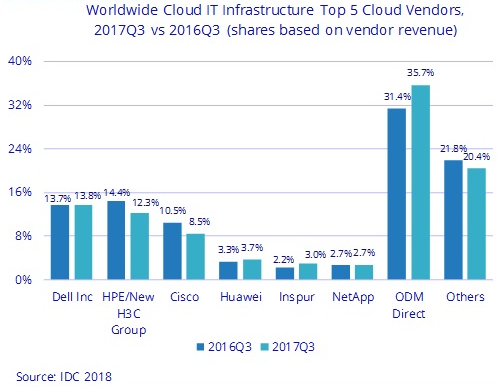
Vendor revenue from sales of infrastructure products (server, storage, and Ethernet switch) for cloud IT — including public and private cloud — grew 25.5 percent year-over-year in the third quarter of 2017 (3Q17) reaching $11.3 billion, according to the latest worldwide market study by International Data Corporation (IDC).

Cloud IT infrastructure market development

Public cloud infrastructure revenue grew 32.3 percent year-over-year in 3Q17 to $7.7 billion and now represents 30.2 percent of total worldwide IT infrastructure spending — that's up from 26.3 percent one year ago.

Private cloud revenue reached $3.6 billion for an annual increase of 13.1 percent. Moreover, total worldwide cloud IT infrastructure revenue is on pace to nearly double in 2017 when compared to 2013.

Traditional (non-cloud) IT infrastructure revenue grew 8 percent from a year ago, although it has been generally declining over the past several years; despite the declining trend, at $14.2 billion in 3Q17 traditional IT still represents 55.6 percent of total worldwide IT infrastructure spending.

Public cloud also represented 68 percent of the total cloud IT infrastructure revenue in 3Q17. The market with the highest growth in the public cloud infrastructure segment was Storage Platforms with revenue up 45.1 percent compared to the same quarter of the previous year, and making up 42 percent of the revenue in public cloud.


Compute platforms and ethernet switch public cloud IT infrastructure revenues were up 24.8 percent and 23.2 percent, respectively.

Compute platforms represented 43.9 percent of public cloud IT infrastructure revenue. Private cloud infrastructure revenue was driven by the storage platforms growth of 16.1 percent year over year.

"2017 has been a strong year for public cloud IT infrastructure growth, accelerating throughout the year," said Kuba Stolarski, research director at IDC.

"While hyperscaler providers are driving the lion's share of the growth, IDC is seeing strong growth in the lower tiers of public cloud and continued growth in private cloud on a worldwide scale."

Outlook for regional cloud growth

Except for Latin America revenue, which grew 5 percent from a year ago, all other regions in the world grew their cloud IT Infrastructure revenue by double digits. The Asia-Pacific region (excluding Japan) and Central and Eastern Europe (CEE) saw the fastest growth rates at 50.1 percent and 35.3 percent, respectively.

Canada (22.5 percent) and Western Europe (24.6 percent) had annual growth in the twenties, while the U.S. (18.7 percent), Japan (17.5 percent), and Middle East & Africa (15.8 percent) had annual growth in the teens. With the outlook for cloud infrastructure investment continuing to experience growth, IDC and other analysts anticipate increased demand for hybrid IT solutions.

Disaster recovery plans not as good as they could be, new research warns

A majority of organisations had to deploy their disaster recovery solution at least once in the past year with many unsure as to the specifics of their availability plans, according to a new report from Syncsort.

The study, which gathered results from several reports polling more than 5,600 IT professionals globally, found that 85% of respondents either had no recovery plan or were ‘less than 100% confident’ in their plan. 31% of organisations lost a day or more due to failover, with 28% losing a few hours and 35% losing up to an hour.

Naturally, security is at the top of the conversation when it comes to challenges for cloud deployments. Flipping the question slightly, respondents most frequently cited cloud (43%) as their top security challenge, ahead of sophistication of attacks (37%) and ransomware (35%). Security is also at the top for initiatives companies will undertake in the coming 24 months, cited by 49% of respondents, ahead of business continuity (47%).

Almost two in three companies say they perform security audits on their systems, with 39% doing it annually and 10% auditing every two years or more, while 42% of companies polled said they had experienced a migration failure when transforming their legacy technology.

Writing for this publication earlier this month, Paul Blore, managing director at cloud networking provider Netmetix, noted the benefits of cloud-based disaster recovery systems. “If it isn’t already, business continuity must become a priority for organisations,” Blore wrote. “It’s now easier than ever to migrate to the cloud and take advantage of the inbuilt backup and disaster recovery options available.”

“IT leaders are under immense pressure to provide an enterprise infrastructure that can sustain severe threats and secure vital information while enabling data accessibility and business intelligence,” said Terry Plath, vice president of global services at Syncsort. “Business resilience requires the right mix of planning and technology, and this survey did a thorough job of uncovering how businesses are tackling this increasingly complex and multi-faceted challenge.”

Why more than three quarters of enterprise workloads will be in the cloud by 2020

  • Digitally transforming enterprises (63%) is the leading factor driving greater public cloud engagement or adoption today.
  • 66% of IT professionals say security is their most significant concern in adopting an enterprise cloud computing strategy.
  • 50% of IT professionals believe artificial intelligence and machine learning are playing a role in cloud computing adoption today, growing to 67% by 2020.
  • Artificial Intelligence (AI) and Machine Learning will be the leading catalyst driving greater cloud computing adoption by 2020.

These insights and findings are from LogicMonitor’s Cloud Vision 2020: The Future of the Cloud Study (PDF, free, opt-in, 9 pp.). The survey is based on interviews with approximately 300 influencers LogicMonitor interviewed in November 2017. Respondents include Amazon Web Services AWS re:Invent 2017 attendees, industry analysts, media, consultants and vendor strategists. The study’s primary goal is to explore the landscape for cloud services in 2020. While the study’s findings are not statistically significant, they do provide a fascinating glimpse into current and future enterprise cloud computing strategies.

Key takeaways include the following:

83% of enterprise workloads will be in the cloud by 2020

LogicMonitor’s survey is predicting that 41% of enterprise workloads will be run on public cloud platforms (Amazon AWSGoogle Cloud PlatformIBM CloudMicrosoft Azure and others) by 2020. An additional 20% are predicted to be private-cloud-based followed by another 22% running on hybrid cloud platforms by 2020. On-premise workloads are predicted to shrink from 37% today to 27% of all workloads by 2020.

Digitally transforming enterprises (63%) is the leading factor driving greater public cloud engagement or adoption followed by the pursuit of IT agility (62%)

LogicMonitor’s survey found that the many challenges enterprises face in digitally transforming their business models are the leading contributing factor to cloud computing adoption. Attaining IT agility (62%), excelling at DevOps (58%), mobility (55%), Artificial Intelligence (AI) and Machine Learning (50%) and the Internet of Things (IoT) adoption (45%) are the top six factors driving cloud adoption today. Artifical Intelligence (AI) and Machine Learning are predicted to be the leading factors driving greater cloud computing adoption by 2020.

66% of IT professionals say security is their greatest concern in adopting an enterprise cloud computing strategy

Cloud platform and service providers will go on a buying spree in 2018 to strengthen and harden their platforms in this area. Verizon (NYSE:VZ) acquiring Niddel this week is just the beginning. Niddel’s Magnet software is a machine learning-based threat-hunting system that will be integrated into Verizon’s enterprise-class cloud services and systems. Additional concerns include attaining governance and compliance goals on cloud-based platforms (60%), overcoming the challenges of having staff that lacks cloud experience (58%), Privacy (57%) and vendor lock-in (47%).

Just 27% of respondents predict that by 2022, 95% of all workloads will run in the cloud

One in five respondents believes it will take ten years to reach that level of workload migration. 13% of respondents don’t see this level of workload shift ever occurring. Based on conversations with CIOs and CEOs in manufacturing and financial services industries there will be a mix of workloads between on-premise and cloud for the foreseeable future. C-level executives evaluate shifting workloads based on each systems’ contribution to new business models, cost, and revenue goals in addition to accelerating time-to-market.

Microsoft Azure and Google Cloud Platform are predicted to gain market share versus Amazon AWS in the next three years, with AWS staying the clear market leader

The study found 42% of respondents are predicting Microsoft Azure will gain more market share by 2020. Google Cloud Platform is predicted to also gain ground according to 35% of the respondent base. AWS is predicted to extend its market dominance with 52% market share by 2020.

Tech New Recap for the Week of 01/08/17

If you had a busy week in the office and need to catch up, here’s our tech news recap of articles you may have missed the week of 01/08/2017!

The future of data technology. How network verification differs from monitoring, and what it’s good for. Windows 10 Fall Creators Update is ready for business. How Cisco’s newest security tool can detect malware inside of encrypted traffic. Intel CEO: 90% of vulnerabilities will be fixed in coming days and more top news this week you may have missed! Remember, to stay up-to-date on the latest tech news throughout the week, follow @GreenPagesIT on Twitter.

Tech News Recap

Join GreenPages’ Cloud Experts on January 17th for a lively, non-biased discussion at our webinar:

AWS or Azure? How to Move from Analysis Paralysis Toward a Smart Cloud Choice

Click here to register!

IT Operations

  • Big data: Amazon, Google, Microsoft, the cloud… and other 2018 trends
  • 5 big data focal points for CDOs and CIOs in 2018
  • CIO: Adaptability essential to modernize IT structure
  • Hyperconverged secondary storage market heats up
  • How network verification differs from monitoring, and what it’s good for
  • How does SD-WAN manage real-time network traffic performance?
  • Why your company should stop neglecting data storage: 6 tips for getting organized
  • When disaster strikes too close to home, IT needs data protection
  • Future of data technology: Transformation trends for 2018

Microsoft

VMware

  • Meltdown and Spectre: VMware products

Cisco

  • How Cisco’s newest security tool can detect malware in encrypted traffic

Cloud

Security

Thanks for checking out our tech news recap!

By Jake Cryan, Digital Marketing Specialist

AWS or Azure? How to Move from Analysis Paralysis Toward a Smart Cloud Choice

Click here to register!

20 metros generate three fifths of global colocation revenues, says Synergy Research

According to the latest data from Synergy Research, five metros comprise more than a quarter of the worldwide colocation market and the top 20 account for 59% of worldwide retail and wholesale colocation revenues.

London, New York, Shanghai, Tokyo and Washington were the top five metros, with Chicago, Dallas, Frankfurt, Silicon Valley and Singapore comprising the top 10. Amsterdam, Atlanta, Beijing, Hong Kong, Los Angeles, Paris, Phoenix, Seattle, Sydney, and Toronto were in the top 20.

On the vendor side, in Q3 Equinix was the market leader by revenue in eight of the top 20 metros. Digital Realty will comprise five more once their acquisition of DuPont Fabros operations reaches a full quarter. Other vendors in the mix include 21Vianet, China Telecom, and CyrusOne.

“While we are seeing reasonably robust growth across all major metros and market segments, one number that jumps out is the wholesale growth rate in the Washington/Northern Virginia metro area,” said John Dinsdale, a chief analyst and research director at Synergy.

“It is by far the largest wholesale market in the world and for it to be growing at 20% is particularly noteworthy.

“The broader picture is that data centre outsourcing and cloud services continue to drive the colocation market, and the geographic distribution of the world’s corporations is focusing the colocation market on a small number of major metro areas,” Dinsdale added.

Earlier this month, Synergy Research argued that data centre mergers and acquisitions in 2017 surpassed 2015 and 2016’s figures combined, producing 48 transactions last year compared with 45 for the previous two years.

Dropbox files confidentially for IPO – reports

Cloud storage provider Dropbox has filed confidentially for IPO, according to a Bloomberg report.

According to the report, Goldman Sachs and JPMorgan will lead the potential listing, with Dropbox aiming to list in the first half of this year. The company’s most recent valuation, in 2014, was at $10 billion.

The move, alongside Spotify’s bid to go public at the very start of this year, represents the first tech IPOs of 2018. Writing in October, venture capitalist Fred Wilson said that 2018 and 2019 will be ‘bumper years’ for tech IPOs ‘assuming the markets behave.’ Dropbox regularly made pundits’ lists of potential tech IPOs this year, including this MarketWatch piece on New Year’s Eve.

It was the better part of 11 years ago when Drew Houston posted his app idea onto Hacker News with the tagline ‘throw away your USB drive.’ Initial feedback from users was positive – apart from one user who insisted it was ‘trivial’ to build such a system in Linux – and the product officially launched in September 2008. A series A funding round of $6 million followed in November, with total funding exceeding $2 billion up to series D and including credit lines.

Major rivals include Microsoft’s OneDrive and Box – although the two companies were at pains to say they weren’t direct competitors – while Houston regaled the story of how Steve Jobs was interested in acquiring Dropbox, adding that he saw the company as a feature, rather than a product.

Unlike Box, whose focus on the enterprise was clear pretty much from its inception, Dropbox took longer to move in. the company made its most concerted push to the enterprise market in November 2015 with Dropbox Enterprise, although by this time it already had Dropbox for Business with a major user base. Earlier that year, Dropbox said its total number of users had exceeded 400 million.

In more recent times, the company hit a $1 billion annual run rate at the start of last year, becoming one of only five software as a service (SaaS) providers to do so as well as being the fastest. In comparison, it took Salesforce approximately 10 years to hit this figure; by August 2017, the original SaaS king passed the $10 billion run rate.

More than anything else, Dropbox continually refused to be rushed or drawn in to IPO discussions. Houston always insisted that Dropbox would move when the time was right. As Recode put it, the joke was that the company was set to go public in the fourth quarter of that year… every year.

In the annual Forbes Cloud 100 list, first published in 2016 showcasing the hottest private cloud companies – privately owned, rather than ‘private cloud’, of course – Dropbox secured second place in both years. As this publication put it earlier this week when Veeam – another company on the list and another company not rushing going public – issued its financial results, the list has always been an excellent barometer of the best private companies who could be ready to take the next step.

If all goes to plan, Dropbox will become the first Y Combinator-backed company to go public.

The cloud news categorized.